EDWARDS AIR FORCE BASE, Calif. -- In 1942, Staff Sgt. Norman Craig arrived in the seemingly bleak landscape of the Mojave Desert. Craig was stationed at the Muroc Army Airfield in the western corner of the desert, now named Edwards Air Force Base. With the warm wind whipping dust particles across his face, Craig was initially shocked. “Never shall I forget the scene of desolation which confronted me upon my arrival,” he confessed. The Muroc base was, Craig pondered to himself, in the middle of nowhere with unpaved roads. A year later, his opinion changed. Roads were paved, Joshua trees were planted along the roadways, and oil was sprayed across the base to eliminate the “sand and dust nuisance.” Craig now witnessed the stunning beauty of the southern California desert. “Frankly, I’m happy to be here,” he confirmed. Craig and the other service members began to enjoy the natural charm of this weather-beaten post.
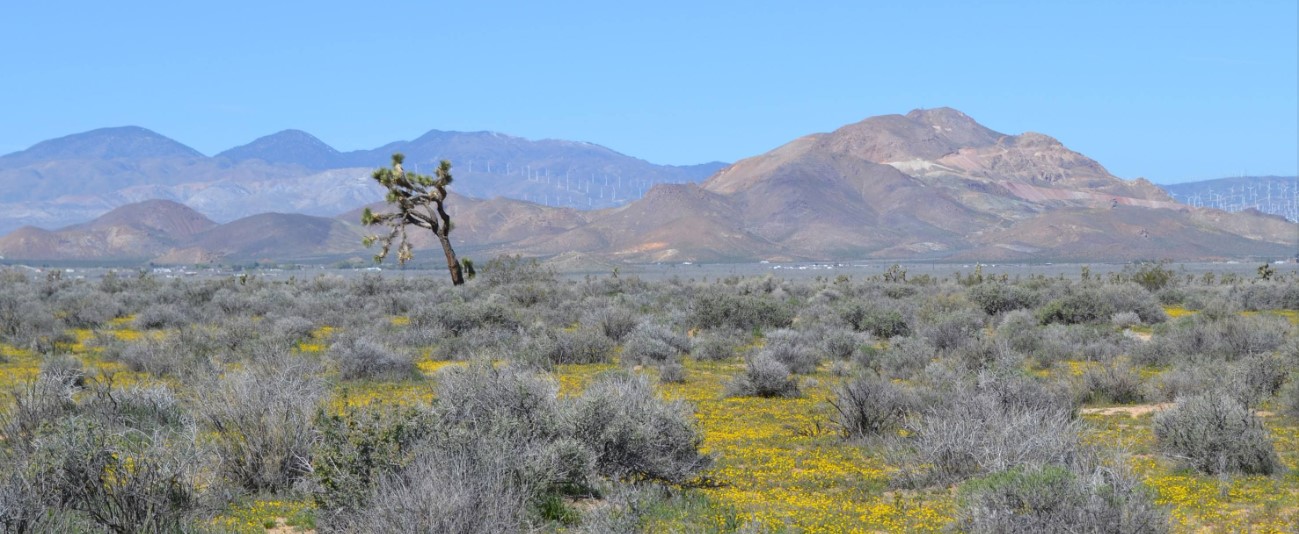
The Joshua tree is familiar vegetation at Edwards Air Force Base, California. It was once described as "the patriarch of the Mojave." (Courtesy photo)
The Army Air Corps chose Edwards as a military installation because of the landscape. The flat surfaces of dry lakebeds—intrinsic to the remote scenery—create a natural airfield for innovative flight training and research. Though it is well-known for the practicality of its natural environment, Edwards is not traditionally recognized for its beauty. But it is beautiful. “For sheer beauty where can one go to enjoy grander sunsets and star-studded skies than right here?” Craig wondered, “There is added beauty in the mountain backdrops which practically encircle our base.” As his remarks encouraged fellow military personnel to find the appeal in their remote desert location, Craig also inadvertently pointed to a unique environmental phenomenon.
California is one of the few places in the world that has five different climate types in close proximity to each other: Mediterranean, desert, steppe, cool interior and highland. The mountainous backdrop forges the desert climate of the Mojave. Even more, California is the only state in America that has the rare Mediterranean climate. Though it is popularly said to never rain in southern California, when it does rain there and in the entire state, it mostly pours in the winter. In comparison, precipitation mostly falls in the summer for the rest of the world.
For those located in the Mojave Desert, the rain in the winter months causes nature to come alive. A dynamic landscape emerges in this barren land with mesquite woodlands, poppy fields, Joshua Trees and other succulent shrubs peppering the earth. To be stationed or work at the Edwards Air Force Base offers opportunities in this unique California terrain. One not only serves one’s country but also enjoys a storied history of military aviation prowess. Let the words of Craig echo in your ears. “Open your eyes, men, to the beauties of this base and your observations cannot but leave you with a feeling of greater contentment and happiness. In these dark days it is well to realize that we at [Edwards] have much to be thankful for.” Despite a deep sense of uncertainty for the future, he still maintained hope while urging others to do the same by embracing the beauty of the base.
(Charnan Williams Chochotte works for the Air Force Test Center History Office at Edwards Air Force Base, California.)