EDWARDS AIR FORCE BASE, Calif. --
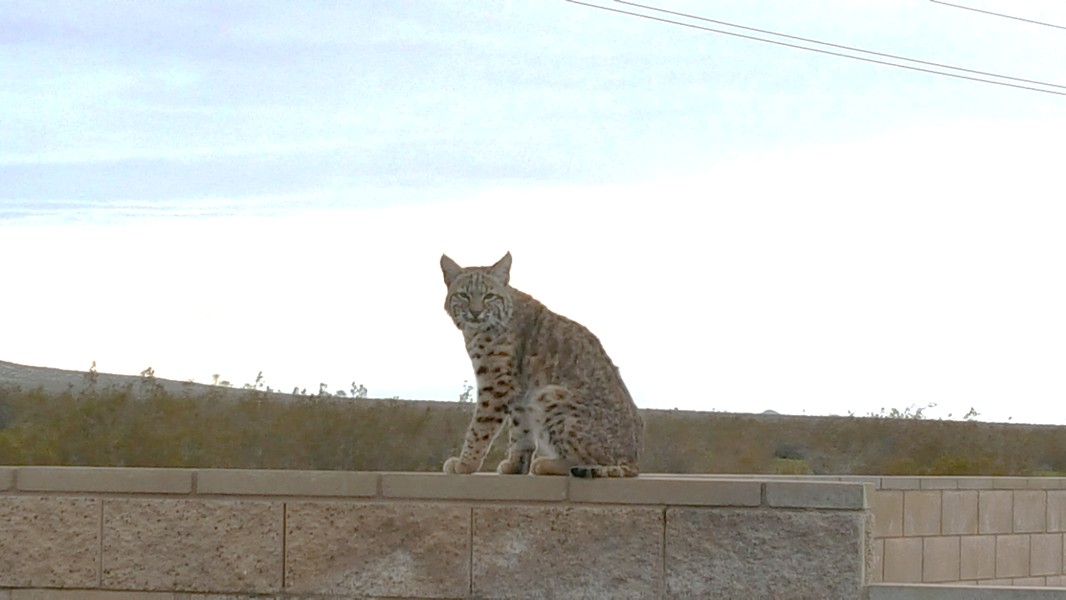
A bobcat sits perched atop a wall in a base housing area. Base residents and workers have a responsibility to eliminate human-caused sources of outdoor food, water and shelter to help protect people, pets and wildlife on base. (Courtesy photo)
As the seasons change, people are seeing an increase in bobcat sightings across the base including near work and housing areas – a powerful reminder that people share the desert with many wild animals.
The most important things for people to do to prevent wild animals from taking up residence in the populated areas of the base are to eliminate all sources of food, water and shelter.
First, don’t’ leave pets outside unattended.
Second, don’t put food or water outside for pets or for any wildlife, no matter how seemingly benign. Bird feeders and scraps of food left outside attract birds and squirrels, which in turn attract bobcats and coyotes looking to eat the birds and squirrels.
It puts the whole neighborhood at greater risk.
Next, eliminate all sources of water including standing water in yards and around buildings.
Additionally, eliminate any area that would provide shelter for wild animals. Keep yards picked up and bushes trimmed. Any area that is attractive for wild animals to live in presents a danger to base workers, residents and family pets.
These steps not only protect the people living and working here, they also protect wildlife. Helping wildlife maintain a natural wariness of people helps nature pursue its course – naturally.
Right now, many bobcat mothers are looking for safe places to have and raise their young. Understanding what attracts bobcats will help prevent unwanted encounters.
|
Attractant
|
Examples on Base
|
|
Food
|
Rodents, squirrels, rabbits, birds, pet food and even small, unattended pets
|
|
Water
|
Pools, fountains, birdbaths and outdoor pet water dishes
|
|
Shelter
|
Rooftops, attics and thick brush or unoccupied yards that offer shade and cover.
|
How to Prevent Bobcat Encounters
Proactive measures are the most effective way to keep bobcats from lingering within residential areas.
|
Action Item
|
Recommended Steps
|
|
Secure Pets
|
Keep dogs and cats indoors, especially from dusk to dawn.
|
|
Feed Pets Indoors
|
Feed all pets inside. Clean up leftover food and water.
|
|
Remove Water Sources
|
Remove or secure all external water sources like pet bowls and birdbaths.
|
|
Maintain Your Yard
|
Trim shrubs and grass to eliminate hiding cover.
|
|
Don’t Feed Any Wildlife
|
Never intentionally feed wild animals (this includes bird feeders and throwing food out for squirrels).
|
What to Do During a Bobcat Encounter
If you see a bobcat, your first choice may be to simply enjoy the sighting from a safe distance. Never attempt to corner or touch a wild animal. If the animal is on your property and you have children, pets, or feel unsafe you may need/want to encourage it to leave.
To discourage a bobcat from your yard, ensure the animal has an open pathway for escape, then:
- Make loud noises by yelling, using whistles, banging pots and pans, or using an air horn.
- Spray the bobcat with a garden hose from a safe distance.
If a bobcat does not leave after these actions, it is likely protecting its young or a food source. Leave the area immediately and call 661-277-1401 ext. 3 for assistance.
Emergency Situation
If you feel there is an immediate threat, follow these steps:
|
Do
|
Do Not
|
|
✅ Protect children and pets immediately.
|
❌ Do not run, as this can trigger a chase response.
|
|
✅ Make yourself look big and create loud noises.
|
❌ Do not corner or get between a bobcat and its young.
|
|
✅ Back away slowly, leaving the animal an escape route.
|
❌ Attempt to touch or capture an animal.
|
|
✅ Call 911 if there is an immediate threat to human life.
|
|
If you see young kittens, do not attempt to approach them. Their mother is either nearby watching or out hunting and will return soon. Give them space until they leave or contact 661-277-1401, Ext. 3 for assistance.
For more information on local wildlife, please contact the Environmental Management Natural Resources Office by e-mail at 412CEG.CEVA.NaturalResources@us.af.mil.